
Checklist
Pre-shipment inspection checklist for China-sourced industrial equipment
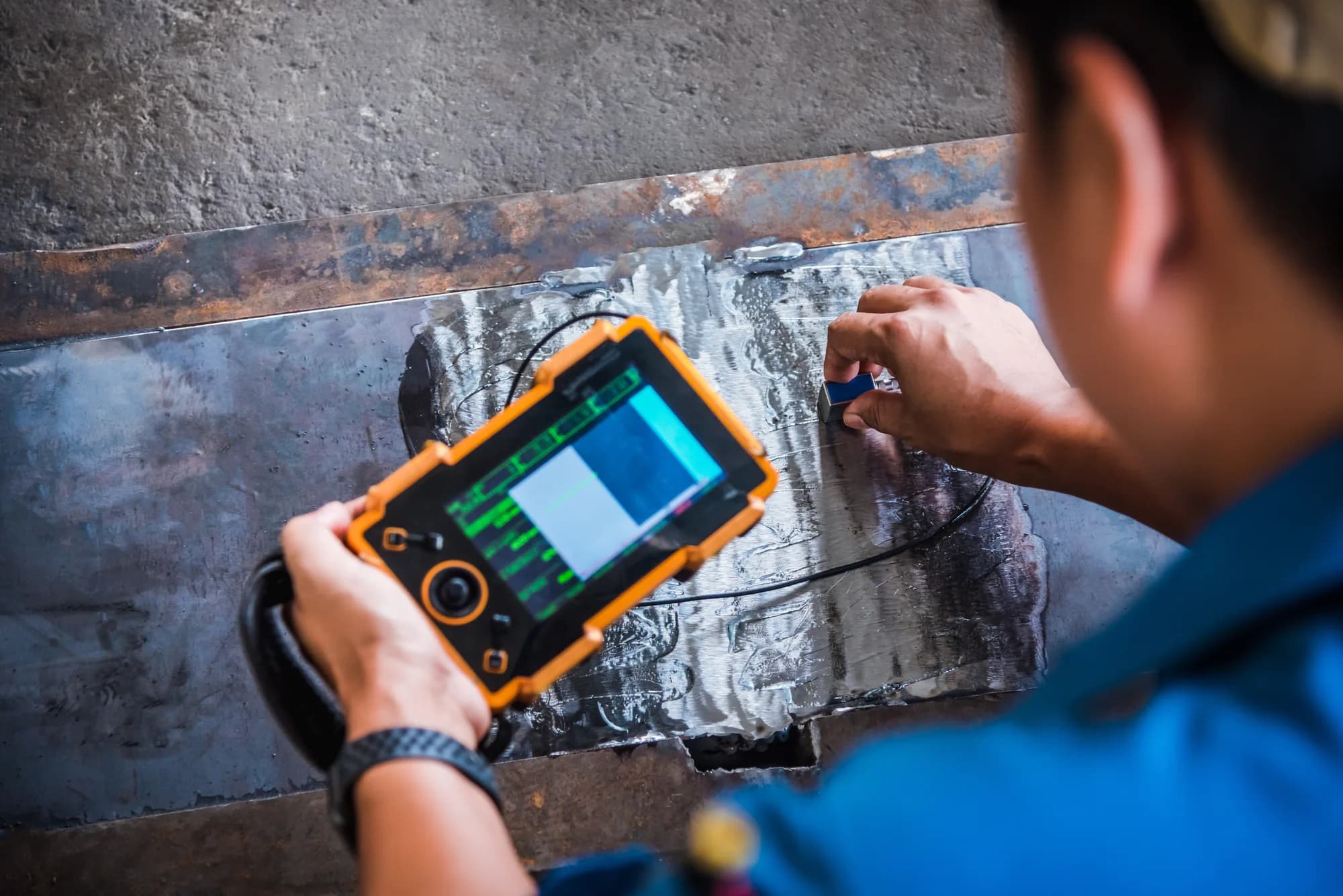
This checklist is meant to be used by a buyer, or the buyer’s inspection coordinator, at the supplier’s premises in the days before shipment is authorised. It is a working companion to Sinospect’s factory acceptance testing and China supplier qualification guides. Cross-reference with the China supplier due-diligence checklist for the upstream qualification work.
Each item below is designed as a pass / fail / follow-up check that rules out a specific failure mode. The order is the order a buyer should follow: inspection preparation first, then on-site verification, then documentation, then packaging, then non-conformity handling, then release decision. Skipping the preparation steps in favour of on-site activity is a common reason inspections return findings too late to act on without delaying shipment.
1. Pre-inspection preparation
What is verified at the inspection depends on what was specified before. Most weak inspections fail at this stage rather than on site.
- Inspection scope is named in the supply contract — the contract identifies the inspection event, the acceptance criteria, the right to reject and the consequences of rejection. Inspection rights added by side-letter after award are weaker than rights written into the original contract.
- Inspection body or third-party inspector has documented competence for the scope — where accreditation is required, confirm that the inspection body’s scope covers the equipment category and inspection method. A party without relevant scope can still document visible condition, but should not be treated as a technical authority for tests beyond its competence.
- Test plan and acceptance criteria are written and shared with the supplier in advance — the supplier should not see the test plan for the first time on the inspection day. Pre-sharing converts the inspection from a confrontation into a structured check, and gives the supplier the opportunity to surface problems before the inspector arrives.
- Inspection date is fixed and supplier readiness confirmed in writing — a written readiness confirmation from the supplier (one to three days before the inspection) reduces the risk of an expensive wasted trip where equipment is not actually ready.
2. On-site verification
The inspection itself. Each line item should produce a recorded result, not a verbal confirmation.
- Quantity matches packing list and purchase order — physical count verified against the packing list and the original PO. Discrepancies are recorded immediately, not reconciled later.
- Visual conformity checked against specification — with a sample size appropriate to the lot size and the equipment’s criticality. Use AQL-based sampling, or an equivalent sampling plan, where attribute sampling is appropriate; use full inspection for small, custom or high-value lots.
- Functional tests run per the contract test plan — results recorded in the format defined by the contract (test report template, witness signatures, raw data captured where required). “Passed” without recorded values is not a recorded result.
- Test instruments have current calibration evidence — the meters, gauges, scales and analysers used during the inspection should have valid calibration certificates available on the inspection day. Missing calibration evidence should prevent the buyer from accepting measured results until the gap is resolved.
3. Documentation completeness
Documentation that arrives at the destination port incomplete is expensive to fix. The pre-shipment inspection is the last practical chance to confirm completeness while the supplier still has a release condition to satisfy.
- Test reports issued per unit or per batch as required — the report set matches what the contract specifies, whether that is one report per unit, per batch, or per equipment type.
- Compliance documents match the actual equipment shipped — certificates of conformity, CE Declarations of Conformity, IEC type-test reports and other required compliance documents should match the model, serial-number range, product family and validity period of the goods leaving the factory. Documents issued for a similar but different model are not valid coverage.
- Operating manuals, drawings and spare-parts lists provided in the contracted languages — including translated versions where the contract specifies. Missing translations are a contractual gap, not a cosmetic one, when the destination market requires them.
- Serial numbers on equipment match serial numbers on documentation — the cross-reference between the physical equipment, the test reports, the certificates and the packing list is verified item by item, not assumed.
4. Packaging and loading readiness
Packaging failures cause damage in transit that is expensive to recover, contractually contested and often only visible at destination. The inspection is the last opportunity to check packaging against the route.
- Packaging type and materials match the contract specification for the shipping route — ocean freight, multi-modal, air freight and overland routes have different packaging requirements. The ISPM 15 mark is verified where wood packaging is used and the destination requires it.
- Fixation and bracing appropriate to the route — strapping, padding, blocking, internal bracing appropriate to the equipment weight and the expected transit forces. Heavy or sensitive equipment requires more than the supplier’s default packaging.
- Markings present and legible — handling instructions, fragile / this-side-up / centre of gravity, lot and order references, destination address. Missing or unclear markings cause handling damage and customs delays.
- Container loading plan reviewed (for FCL); photographic record per unit where applicable — for full-container loads, the loading sequence is reviewed for weight distribution and handling. Photographic evidence of correctly packed units is requested where the buyer needs proof for insurance or release.
5. Non-conformity handling
Findings are useful only if they are treated as corrective-action items, not as informal observations.
- Non-conformities classified per a written framework (Critical / Major / Minor) — classification determines the release path. The framework should be defined before the inspection, not on the day, so classification is consistent across inspections and across suppliers.
- Corrective-action items have deadlines and named owners — each item recorded with a remediation deadline, a named person on the supplier side responsible for closure, and a defined evidence requirement for sign-off.
- Photographic evidence of remediation required before close-out — where the corrective action is a physical change to packaging, fixation or labelling, photographic evidence confirming the fix has been applied across the shipment (not just one sample) is the practical close-out standard.
6. Release decision
Release is a buyer-side commercial decision informed by the inspection report, not an automatic consequence of the inspection being conducted.
- Inspection report signed by the inspector — the inspector’s report is signed, dated and identifies the inspector by name and accreditation reference where applicable.
- All Critical and Major non-conformities closed or formally accepted with mitigation — Critical items normally block release; Major items normally block release; Minor items can be accepted with documented mitigation if the buyer chooses.
- Buyer (or buyer’s authorised agent) issues written release authorisation — release is authorised in writing, separately from the inspection report. The authorisation references the inspection report and confirms the closure of any open items.
- Release documents handed to forwarder with required copies retained — the document set required by the destination customs regime, the buyer’s payment instrument (e.g. letter of credit) and the buyer’s internal audit trail is complete before equipment leaves the factory.
Decision rule
A shipment passing all six categories has cleared the minimum pre-shipment standard. A shipment failing one or more items has not been disqualified, but has surfaced a finding the buyer should treat as a release-decision input — either resolved before shipment or accepted as a documented risk with mitigation. Treating the release authorisation as the buyer’s commercial decision, informed by the inspection report rather than determined by it, preserves the right to hold shipment when the report surfaces issues.
How Sinospect supports pre-shipment inspection
Sinospect coordinates pre-shipment inspections at Chinese factories on behalf of EPC teams, industrial buyers and project developers. The scope covers third-party inspector engagement, written corrective-action tracking and release-readiness verification before shipment. The deliverable is a written inspection record with findings classified, remediation evidence documented and the buyer’s release decision supported by the document trail.
See how Sinospect works for the full execution method, read the factory acceptance testing guide for the contract-defined acceptance side of the same work, or see selected field notes from Sinospect engagements for an anonymised example of a pre-shipment inspection with a corrective-action loop.
About this checklist
How is a pre-shipment inspection different from a factory acceptance test (FAT)?
A pre-shipment inspection (PSI) is the broader release-readiness check before goods leave the factory: quantity, visible conformity, documentation completeness, packaging and loading. A FAT is the narrower, contract-defined acceptance event where named tests are run against named acceptance criteria. A strong factory-control programme often includes both — the FAT confirms technical performance; the PSI confirms that what passed the FAT is the same thing being shipped, with the right paperwork and packaging.
Can a pre-shipment inspection be waived for repeat suppliers?
It can be — but the waiver should be a written decision, not a passive habit. A reasonable framework is to require full PSI on first contracts with a supplier, on contracts above a value threshold, on custom-spec equipment, and after any significant change at the supplier (new factory site, ownership change, new product family). Repeat commodity orders from a supplier with a clean track record can move to lighter-touch verification — but documentation completeness and packaging should still be checked every time.
Who issues the release authorisation — the inspector or the buyer?
The inspector issues the inspection report. The buyer (or the buyer's authorised agent) issues the release authorisation. These are distinct decisions. An inspector who has not been delegated release authority should not authorise shipment, even when no non-conformities are found. Treating release as the buyer's commercial decision — informed by the inspection report — preserves the right to hold shipment if the report surfaces issues.
What happens if non-conformities are found at the pre-shipment inspection?
Non-conformities should be classified (typically Critical / Major / Minor), recorded in writing with photographic evidence where applicable, and returned to the supplier as corrective-action items rather than informal observations. Critical and Major items should normally be closed before release; Minor items can sometimes be accepted with documented mitigation if the buyer agrees. Photographic evidence of each remediation — confirming the fix is applied across the shipment, not just one sample — is the practical close-out standard.